


Welcome to our practical guide to descaling your kettle! A kettle is not only an indispensable kitchen appliance, but also a faithful companion for your morning coffee or tea. However, over time, limescale deposits can build up, which can not only impair the kettle's performance but also negatively affect the quality of your drinks. Don't worry! In this article, we'll show you how to easily descale your kettle to ensure pristine freshness and a longer lifespan. Let's dive in and discover the best methods for effectively descaling your kettle!
Why is it important to descale the kettle regularly?
Regular descaling of your kettle is crucial to maintaining its performance and ensuring the quality of the water it provides. Here are some reasons why descaling is important:
Maintaining performance: Limescale deposits in the kettle can impair heating performance and cause the water to heat up more slowly. This can not only be annoying but also negatively impact the kettle's energy efficiency.
Extending the lifespan: Limescale deposits can damage the internal components of your kettle and lead to malfunctions in the long run. Regular descaling can extend the life of your kettle and prevent costly repairs or replacements.
Improving water quality: Limescale deposits in kettles can affect the taste and quality of the water you use. Removing limescale ensures your water is clean, clear, and free of unwanted deposits.
Hygiene: Limescale deposits provide an ideal breeding ground for bacteria and microorganisms that can pose a health risk. Regular descaling helps maintain a hygienic environment inside the kettle and reduces the risk of contamination.
Regular descaling of your kettle is crucial for maintaining its performance, extending its lifespan, improving water quality, and ensuring a hygienic environment. It's a simple yet important maintenance task that helps your kettle function optimally and deliver clean, fresh water.
Recognizing signs of limescale deposits in the kettle
Limescale deposits in a kettle are easy to spot: the water boils more slowly, there's a loud noise when heating, and you can see white residue or granules on the bottom and sides of the appliance. Limescale can also build up on the heating element, reducing the kettle's efficiency. Other clear signs include cloudy water after boiling and an unpleasant taste or smell in the hot water. Regular descaling is important to extend the kettle's lifespan and save energy.
Various methods for descaling the kettle
There are several effective methods for descaling your kettle and removing limescale deposits. Here are some tried-and-tested techniques:
- Vinegar water method: Mix equal parts vinegar and water. Fill the kettle to the maximum with the vinegar water solution and let it soak overnight. The next day, rinse the kettle thoroughly to remove any vinegar residue. Then boil two or three cycles of clean water to eliminate the vinegar smell.
- Citric acid method: Mix citric acid powder or granules with water according to the package instructions. Fill the kettle with the citric acid solution and let it stand for several hours. Rinse the kettle thoroughly and boil several cycles of clean water to remove any remaining citric acid.
- Baking soda method: Mix baking soda with water to form a paste. Apply the paste to the limescale deposits in the kettle and let it sit for a few hours. Use a brush or sponge to loosen the limescale and wipe it away thoroughly. Then rinse the kettle thoroughly and boil several cycles of clean water.
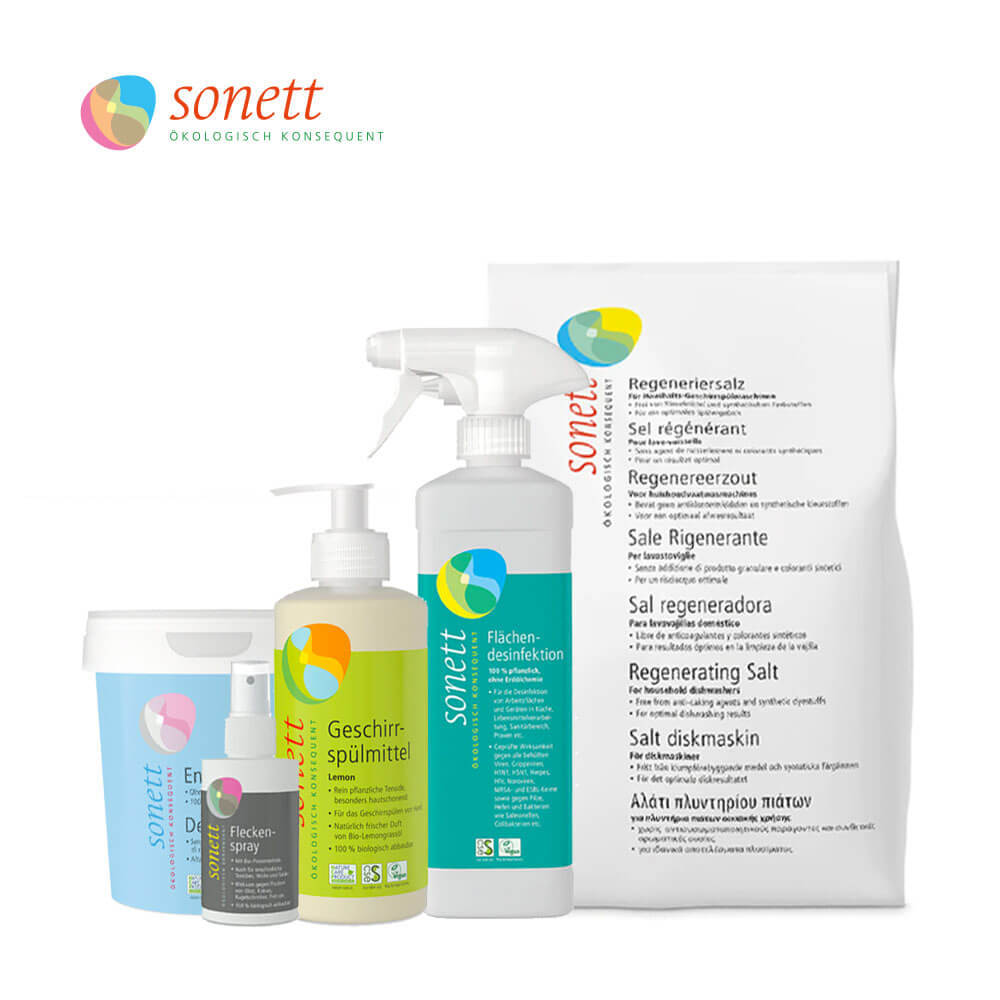
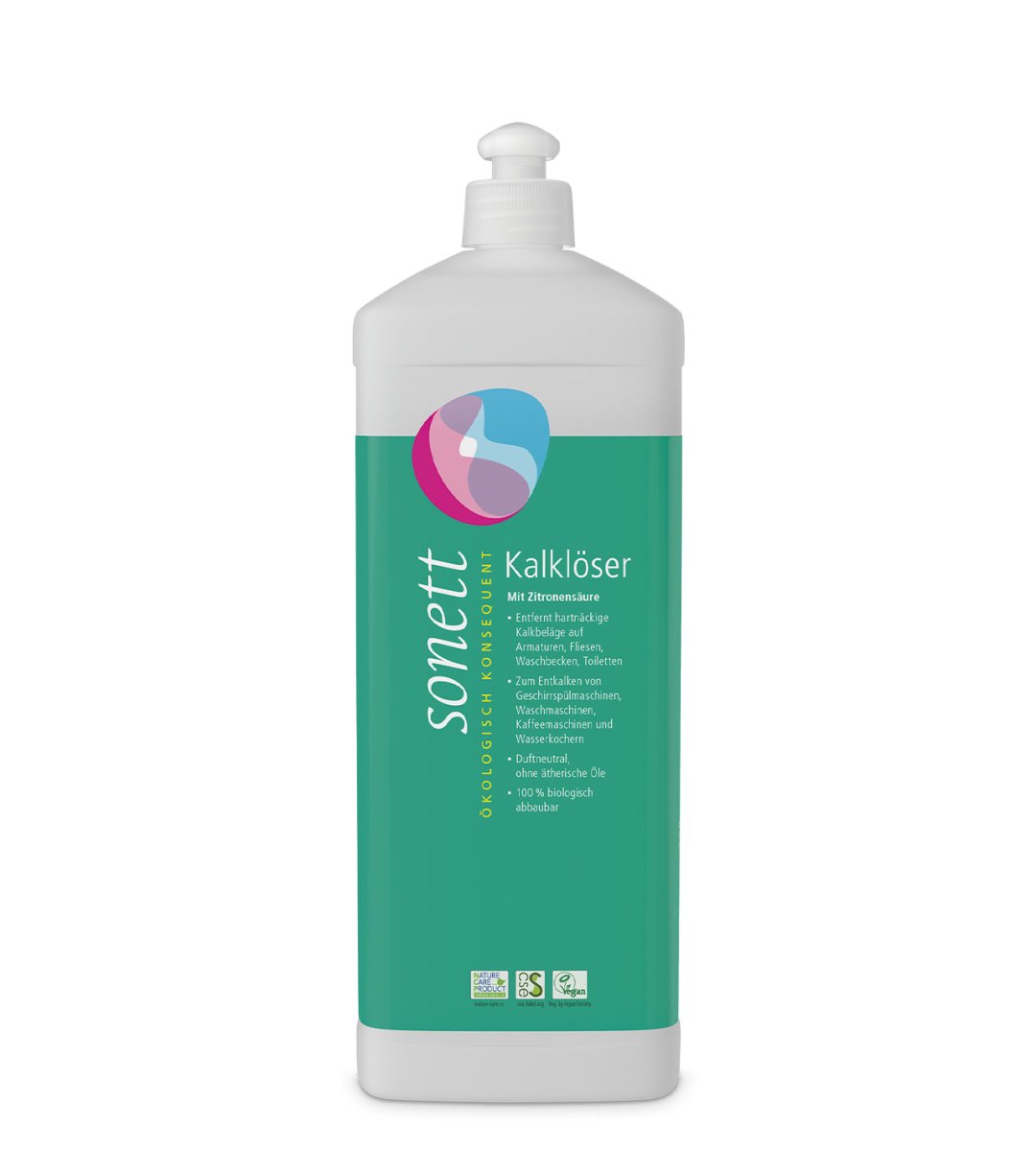
- Special descaling products: Use commercially available descaling products specifically designed to remove limescale from kettles. Follow the instructions on the descaler packaging and rinse the kettle thoroughly to remove all residue. We recommend Sonett's biodegradable descaler .
Regardless of the method chosen, it's important to thoroughly rinse the kettle after descaling and boil several cycles of clean water to ensure no residue remains. Regular descaling will help maintain your kettle's efficiency and ensure you enjoy clean, fresh water.
Step-by-step instructions for descaling your kettle
-
Preparation: Switch off the kettle and unplug it to ensure it is not in use and can cool down. Empty the kettle and discard any remaining water.
-
Choosing the descaling method: Decide on one of the above-mentioned descaling methods that best suits your preferences and available materials.
-
Preparing the descaling solution: Prepare the descaling solution according to the instructions of your chosen method. This could involve mixing vinegar and water, citric acid with water, baking soda with water, or using a commercial descaler.
-
Soaking time: Pour the prepared descaling solution into the kettle until it is completely full. Depending on the method, let the solution work in the kettle for a few hours or overnight. This allows the limescale to dissolve and be removed more easily.
-
Cleaning the kettle: Use a soft brush, sponge, or cloth to thoroughly clean the inside of the kettle and remove limescale deposits. For stubborn deposits, you can also use a gentle scouring pad. Pay particular attention to areas with limescale buildup, such as the bottom and sides of the kettle and the spout, but be careful not to damage the kettle.
-
Rinsing: Rinse the kettle thoroughly several times with clean water to remove all traces of the descaling solution. Run several boiling cycles with clean water to ensure no residue remains in the kettle and the water is clean.
-
Drying and reuse: Dry the kettle thoroughly before using it again to remove any residual moisture. Reassemble the kettle and plug it back in.
Regularly descaling your kettle will not only improve its performance and lifespan, but also ensure that you get clean, limescale-free water.
Tips for preventing limescale buildup in the kettle
To prevent limescale buildup in your kettle, regular maintenance is essential. Use soft water if possible, as it contains less calcium. Only fill the kettle with the amount of water you actually need to minimize limescale formation. Another effective method is to empty and dry the kettle after each use. You can also use a water filter to reduce calcium in the water before filling the kettle. Additionally, regularly using a mixture of water and vinegar or citric acid is helpful in preventing limescale. This will keep your kettle clean and functioning properly for longer.
Conclusion and final thoughts
In conclusion, descaling your kettle is a simple yet important process to ensure its longevity and efficiency. Regular descaling not only prevents the water from tasting bad but also saves energy, as a limescale-encrusted kettle uses more electricity. Use natural descalers like vinegar or citric acid for an environmentally friendly cleaning method, and remember to rinse the kettle thoroughly after descaling to remove any residue. Make descaling a regular part of your kitchen routine and enjoy consistently clean, hot water from your kettle.
If you also need to descale your coffee machine, you will find helpful instructions here .


Leave a comment
All comments are moderated before being published.
This site is protected by hCaptcha and the hCaptcha Privacy Policy and Terms of Service apply.